

Veneered Plywood
Appearance
Veneered Plywood Appearance
Face Grades
Every panel requires both sides to be veneered and the grade of each to be specified
If the reverse is not intended to be seen, then a low grade random veneer will be applied
This is referred to as a "balancer" or "balancing veneer". It equalises the panel tension and improves dimensional stability. Without a balancer, the panel will be prone to warping.
A Grade
B Grade
Balancer
Top grade for high end decorative use
This would be the front facing side
A lower grade veneer
Usually the same species as the face
Occasionally seen - i.e. inside of cupboards
Low grade veneer of a random species
Species can vary within the same manufacture run
Never intended to be seen
Natural
Select
Sequenced
Varied & irregular with greater colour variation
A shorter series of similar faces
Our standard quality
Good structure with small variation in colour
Generally attractive appearance
Premium quality
Similar consistency of colour and structure
A minimum of 8 boards from the same log
Every panel requires both sides to be veneered and the grade of each to be specified. If the reverse is not intended to be seen, then a low grade random veneer will be applied. This is referred to as a "balancer" or "balancing veneer". It equalises the panel tension and improves dimensional stability. Without a balancer, the panel will be prone to warping.
A Grade
Balancer
B Grade
- Top grade for high end decorative use
- This would be the front facing side
- A lower grade veneer
- Usually the same species as the face
- Occasionally seen - i.e. inside of cupboards
- Low grade veneer of a random species
- Species can vary within the same manufacture run
- Never intended to be seen
A Grade
Balancer
B Grade
- Top grade for high end decorative use
- This would be the front facing side
- A lower grade veneer
- Usually the same species as the face
- Occasionally seen - i.e. inside of cupboards
- Low grade veneer of a random species
- Species can vary within the same manufacture run
- Never intended to be seen
Veneer Selection
Natural
Sequenced
Select
- Varied & irregular with greater colour variation
- A shorter series of similar faces
- Our standard quality
- Good structure with small variation in colour
- Generally attractive appearance
- Premium quality
- Similar consistency of colour and structure
- A minimum of 8 boards from the same log
Natural
Sequenced
Select
- Varied & irregular with greater colour variation
- A shorter series of similar faces
- Our standard quality
- Good structure with small variation in colour
- Generally attractive appearance
- Premium quality
- Similar consistency of colour and structure
- A minimum of 8 boards from the same log
Long-grain or cross-grain available on most veneers
Appearance
There are various cutting methods that result in different appearances
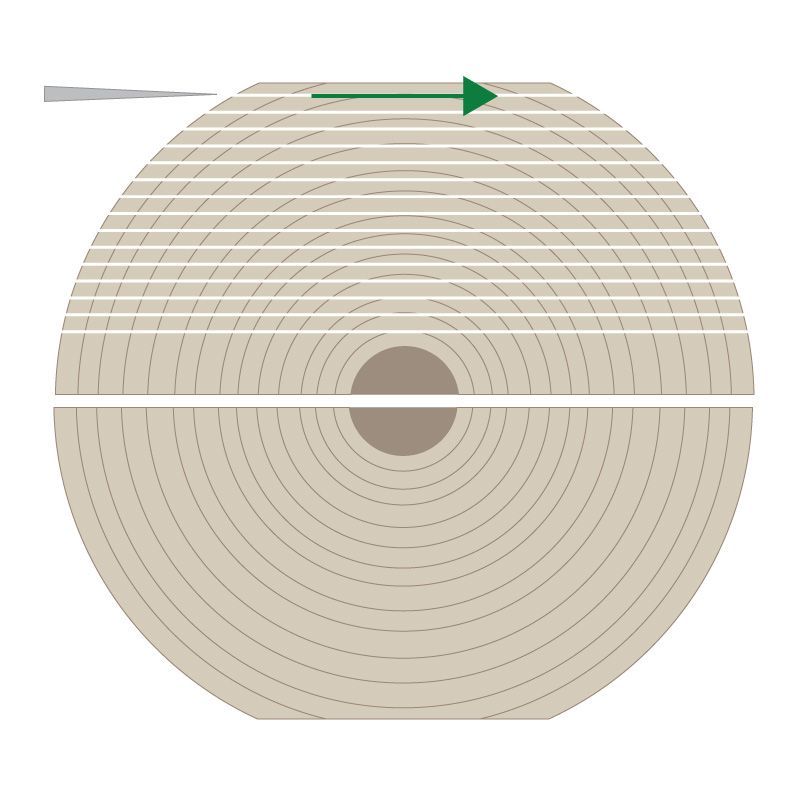
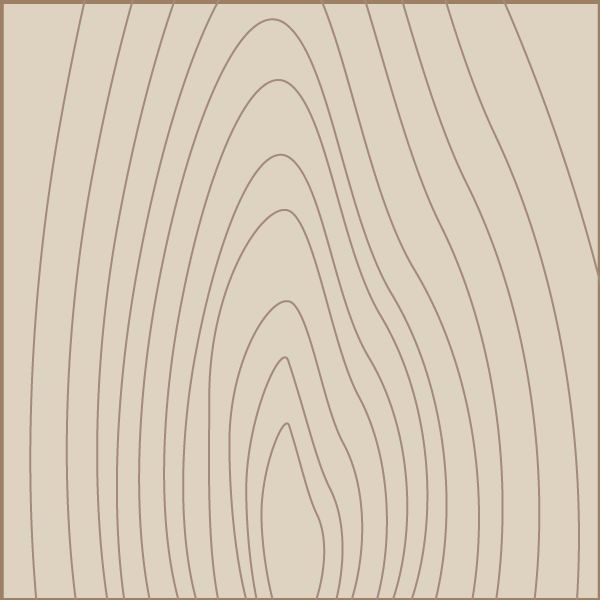
Crown Cut
The log is first cut in half then sliced straight across the growth rings.
Characteristic elliptical rings known as cathedrals are present in the centre with straighter grain at each edge.
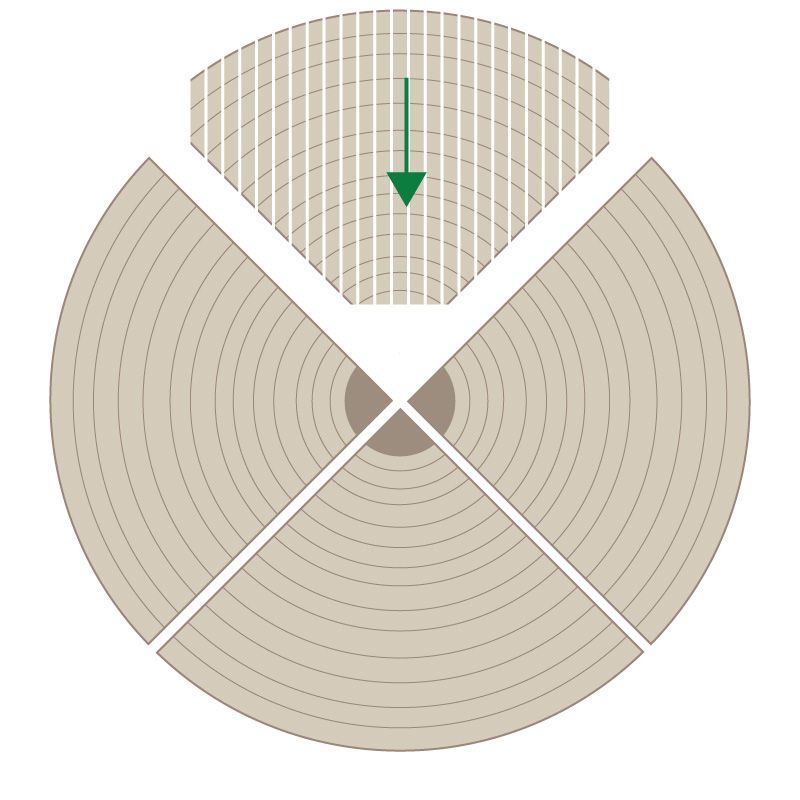
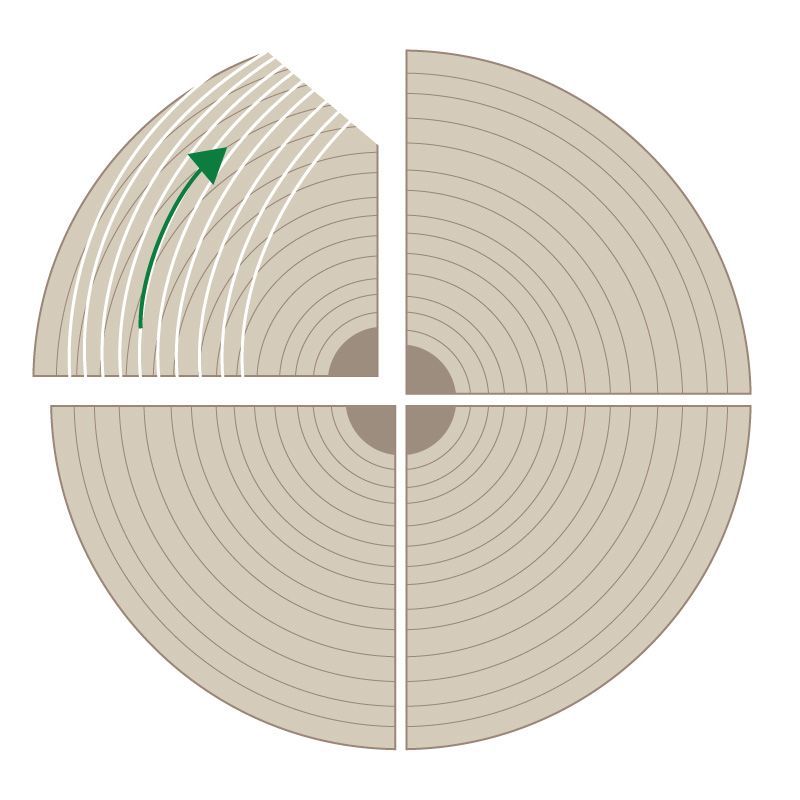
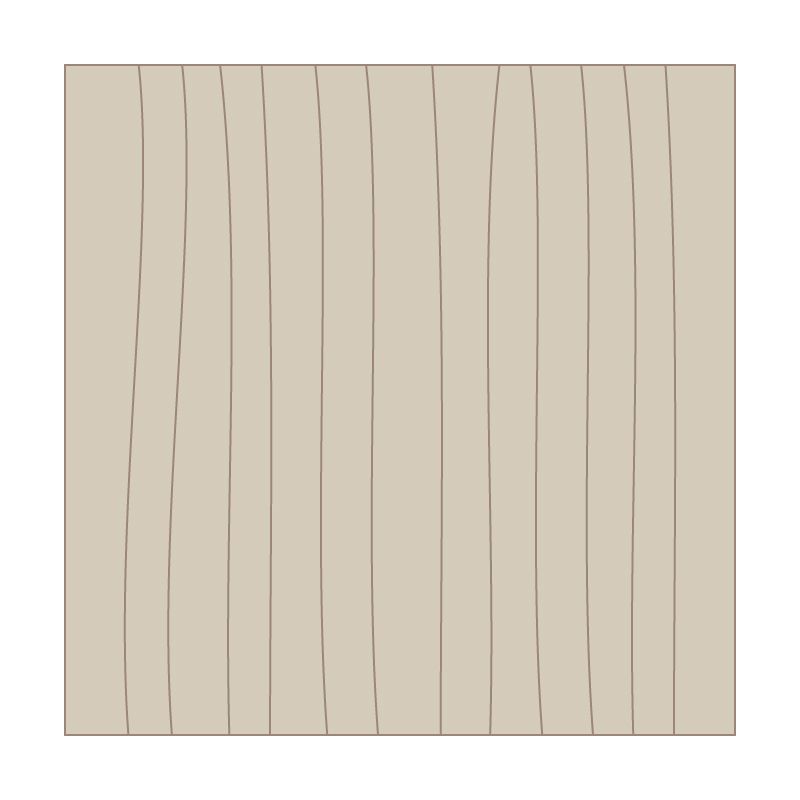
Quarter Cut
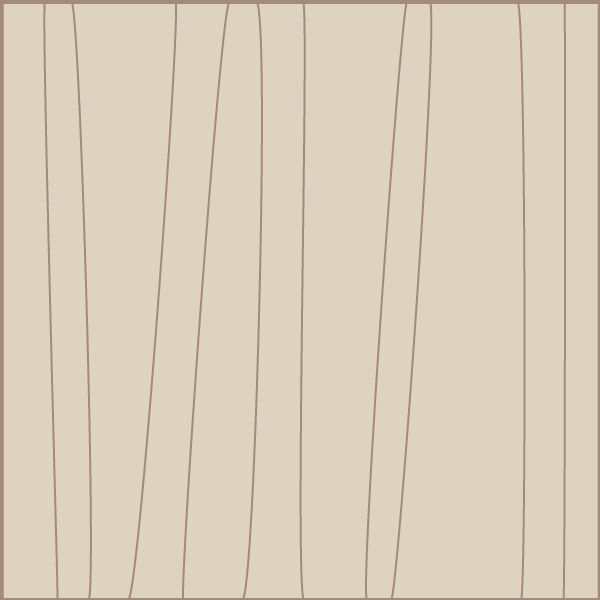
The log is first quarter cut then each flitch is straight sliced at right angles to the growth rings.
A straight, uniform and linear grain is produced.
Rift Cut
The log is quarter cut then lathe mounted. Curved slices are peeled slightly across the rings. This accentuates the vertical grain.
Popular in Oak veneer as this enhances the medullary rays.
Uniformity
Each veneer layon will show variation in grain pattern and colour tone.
Also present will be other natural characteristics inherent in real wood.
If a more uniform appearance is required, to mitigate this natural variation we can offer:
Option 1
Sequential matching
Each panel is laid from a single log
Option 2
Project matching
A labour-intensive service where layons are sorted through to find similar profiles.
Contact us to discuss your requirements
Veneer Thickness
By default, veneers are peeled 0.5mm to 0.6mm thick
Up to 1.5mm thickness is available for some species
Veneer Matching
Unless otherwise specified...
Crown cut layons will be supplied book matched
Quarter cut layons will be supplied slip matched
Book Matched Veneer
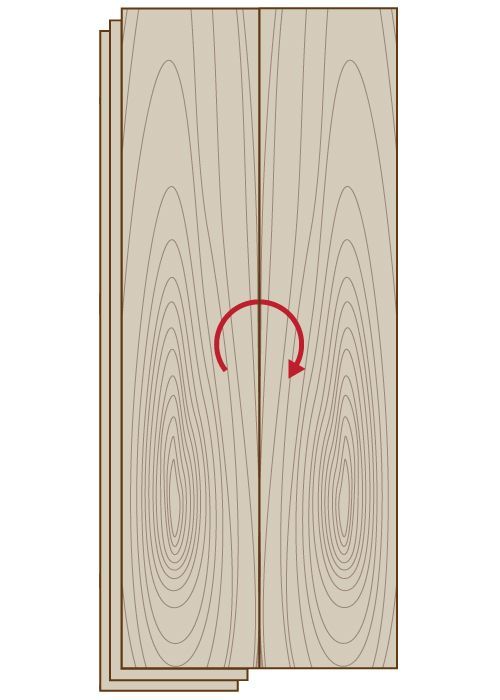
Veneers are opened like a book and joined
producing a symmetrical mirrored effect
Slip Matched Veneer
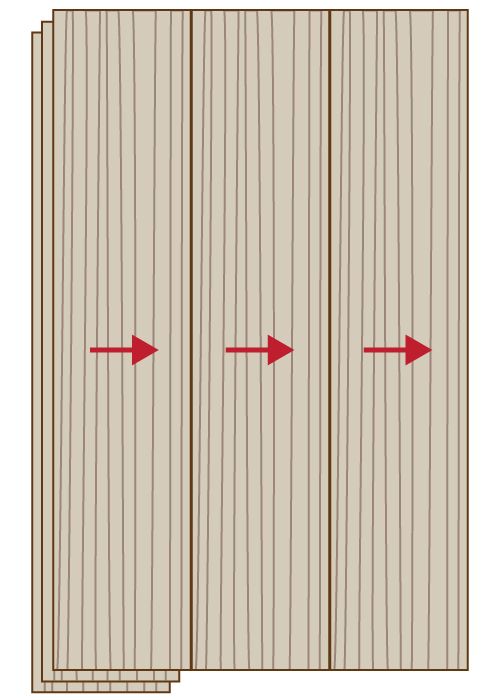
Consecutive veneers are joined
without turning over the leaves
creating a repeating pattern
Other matching options are available:
Book & Turn Matching
As book matching, but alternate leaves are turned so the grain is in the opposite direction
Slip & Turn Matching
As slip matching, but alternate leaves are turned so the grain is in the opposite direction.
Quarter Matching
Four veneer strips are book matched from side to side and top to bottom. Used for creating larger veneer panels.
Random Matching
Mixes veneers not necessarily from the same log, with some turned to create a random effect on the grain pattern.
Expect shades to vary between the strips and grains to flow in different directions.
Controlled Random Matching
As random matching, but carefully selected so different shades and grain direction are more harmonised.
Mismatching
A planking effect is deliberately created by using veneers from different logs. More consistent in colour and grain flow than random matching.
Book & Turn Matching
Slip & Turn Matching
Quarter Matching
Random Matching
Controlled Random Matching
Mismatching
As book matching, but alternate leaves are turned so the grain is in the opposite direction.
As slip matching, but alternate leaves are turned so the grain is in the opposite direction.
Four veneer strips are book matched from side to side and top to bottom. Used for creating larger veneer panels.
Mixes veneers not necessarily from the same log, with some turned to create a random effect on the grain pattern. Expect shades to vary between the strips and grains to flow in different directions.
As random matching, but carefully selected so different shades and grain direction are more harmonised.
A planking effect is deliberately created by using veneers from different logs. More consistent in colour and grain flow than random matching.
Book & Turn Matching
Slip & Turn Matching
Quarter Matching
Random Matching
Controlled Random Matching
Mismatching
As book matching, but alternate leaves are turned so the grain is in the opposite direction.
As slip matching, but alternate leaves are turned so the grain is in the opposite direction.
Four veneer strips are book matched from side to side and top to bottom. Used for creating larger veneer panels.
Mixes veneers not necessarily from the same log, with some turned to create a random effect on the grain pattern. Expect shades to vary between the strips and grains to flow in different directions.
As random matching, but carefully selected so different shades and grain direction are more harmonised.
A planking effect is deliberately created by using veneers from different logs. More consistent in colour and grain flow than random matching.